Friday, March 19, 2010

To the Lighthouse


I have read Virginia Woolf's To the Lighthouse before and while I must confess I do not thoroughly enjoy it, I was able to find many moments which struck me as great, touching, emotionally riveting or at the very least interesting. A few epiphanies I crossed that I liked best will follow this dull introduction. My mind is still in Spring Break mode and V. Woolf is not helping to kick me in school mode...

Mrs. Ramsay is such a wonderful character in the way that her thoughts seem to take over her and all the rest of the characters. Even her simple actions say something so much more deeply. For example, "when she looked in the glass and saw her hair grey, her cheek sunk, at fifty, she thought, possibly she might have managed things better- her husband; money; his books." (Woolf 6). This passage shows how strong the reflection in a piece of glass can be! It reflects not only what is there physically, that we often overlook, but goes deeper within- the physical reflection leads to the emotional and mindful reflection Mrs. Ramsay never saw.

"It was a spendid mind. For if thought is like the keyboard of the piano, divided into so many notes, or like the alphabet is ranged in twenty-six letters all in order, then his splendid mind had no sort of difficulty in running over those letters one by one, firmly and accurately, until it had reached, say, the letter Q" (Woolf 33). The mind is such a splendid thing. When I read this passage I instantly thought of all the courses I have taken with Dr. Sexson. Truly in these courses you realize what a splendid thing the mind is! So many people, reading the same thing, at the same time, all come to such imaginative conclusions that are so unique to that individual's mind. This idea to me is absolutely enthralling and the mind itself is something I will never comprehend!

On page 75 in my book, Nancy's experience with the tide is beautiful. It makes it seem as though she has the power to turn something to small into something greater and larger. She can turn darkness to light, light to dark, change the movement and creatures into something that would not exist unless she altered the environment in even the smallest of ways. I can't explain what I am thinking in a way that seems clear, but I had a moment of "ohhh" seeing the way that something so small can come together with something else just as insignificant and seem so much larger in that unity.

This next passage I chose is charged with emotion, thought, and feeling. I love this passage: "the thing that mattered; to detach it; separate it off; clean it of all the emotions and odds and ends of things, and so hold it before her...Is it good, is it bad, is it right or wrong? Where are we all going to? and so on" (Woolf 112). Who is to decide the answers to these questions? How do we decide what it is that matters or did matter? Does something matter at one point then at another it does not? When does something cease to matter?

Hamlet


First of all, snaps to those who have been blogging over break...I am finally pulling myself together- at least enough to blog! haha

Obviously the grand theme of revenge stands out in Hamlet, but what I find to be epiphanic is the result of revenge, what comes from it.

When Hamlet has the murder of Gonzago performed, it must be an epiphanic moment for his mother and Claudius because they do not think that it would ever be uncovered. I don't know at the moment what sort of epiphany manifested them, but I would say it is an eerie epiphany that carries with it a negative energy. Chilling to say the least which all epiphanies are but this chill is so unlike the chill of any other epiphany. Awe...awful.

I thought of Mick when reading Hamlet (mainly towards the end) because he has an interest in love and epiphanies- in general the subject of love. When Ophelia drowns, the suffering Hamlet feels is so overwhelming. I can only think that in a moment like that because you have so much love for a person when something happens that is so tragic, that love creates an epiphany, an overwhelming realization of your love for them. I said above that when something Tragic happens, this feeling is created, but even in a wonderfully loving moment that is so great and happy, this feeling has the power to take over a person in a way that is truly epiphanic.

This idea of death in Hamlet is a bit depressing I must say because all of the deaths are preventative and quite unnecessary. I did enjoy Hamlet though, as I have before but it was more than just themes, it was the feelings and ideas that came from those themes leading to moments of epiphany.

Sunday, February 28, 2010

Total Eclipse


I really enjoyed reading Annie Dillard's Total Eclipse. It is so interesting because some of her sentences are almost like repetition and addition. For example, the first two sentences of paragraphs 1 and 2.

"It was like slipping into fever, or falling down that hole in sleep from which you wake yourself whimpering"- I immediately thought of a nightmare when I read this passage and it is so odd to think that a dream/ nightmare can arouse in you such emotions when you are not conscious of what is going on around you. It has happened to me before too, when you have a horrible dream that seems so real and you awake with tears in your eyes and a feeling of emptiness, actually it just happened the other day which is why this passage really hit me.

I love that Annie Dillard begins with random remembrances from her trip as opposed to the full story of the eclipse itself. She captivates you enough in the first paragraph to be able to go on with the description of the clown. And why is it that she is unable to forget this trivial clown painting? It is so interesting the things that we notice like "a painting of the sort which you do not intend to look at, and which, alas, you never forget. Some tasteless fate presses it upon you."

When reading total eclipse I noticed too that she uses a lot of language connected with descent like "sliding", "slipping", "falling down", "slope", "descended", "lost altitude"...very interesting!

The way that Dillard describes the eclipse is an epiphany in itself! On page 87 she talks about the drive out to find a hilltop and discusses how familiar it is. After reading this, I thought is the familiar something that goes unnoticed or is forgotten to the point of it being meaningless?

Distance obscurs vision (p.88)

"It began with no ado." (p.89) The eclipse in a sense is like an epiphany...you don't know when it will happen, how it will feel...like something else that comes to mind....if ya know what I mean.

I very much enjoy dillard's metaphors too EX.- eclipse--kissing to marrying--fying to falling

I have to babysit so I will add to this later....

Friday, February 26, 2010

Passages from Tintern Abbey

I rather liked these passages and wanted to at least
post them because they really stuck out in
the poem as I was reading and at times I would find myself re-reading them, over, and over, and over...

"Though absent long, these forms of beauty have not been to me, as is a landscape to a blind man's eye"

"Feelings too of unremembered pleasure..."

"his little nameless, unremembered acts of kindness and of love"

"That serene and blessed mood, in which affections gently lead us on"

"When these wild ecstasies shall be matured,
Into a sober pleasure, when thy mind
Shall be a mansion for all lovely forms,
Thy memory be as a dwelling-place
For all sweet sounds and harmonies;"


I would have to say that this is one of the more beautiful poems Wadsworth wrote (at least in comparison to intimations of immortality, though who am I to judge?)

Seeing Tintern Abbey differently


First of all, how ironic that I had to read Wordsworth's intimations of immortality today for critical theory...

The first time that I read Wordsworth's Tintern Abbey was probably about a month ago when I was at Sola...I thought maybe it was the atmosphere or my mood, but I could not understand him (maybe didn't want to for some reason). I was lost and almost bored, though I hate to use that word. The classical style caused me not to SEE it, only READ it. Dr. Sexson is right though, now that we have been in Capstone, we will read it differently.

Wordsworth's epiphany or recollection of this place, as with much of his poetry has a lot of images of nature. I feel like perhaps my blog will go off in many directions because I am making a lot of random connections and have some ideas that do not necessarily connect. I enjoyed the image of the crab (lines 22-23) and the idea of solitude or being alone. They often go unnoticed and similar to humans keep to themselves in their own "cave".

"Almost suspended, we are laid asleep In body, and became a living soul, While with an eye made quiet by the power of harmony, and the deep power of joy, we see into the life of things"
- I think of entering into the dream world which, yes, is mostly a world of beauty and joy, things forgotten are awakened. But the dream world, as we all know, can also be a world of deeper power filled with hurt and sadness. I like that Wordsworth focuses on the joy it seems and the image of dreaming-- an eye made quiet puts an image in my mind of entering into a sleep or perhaps it has nothing to do with sleep and dreams but simply seeing your thoughts with your eyes open. By this I mean, you are looking in, not out even while your eyes appear to be looking out.

"Sylvan Wye"-- here there is a connection between spirit and the river through language. I posted a picture above of the River Wye, a river along the border of Wales and England.

"The picture of the mind revives again"- for Wordsworth this simply shows that he has opened his eyes and sees nature (previous lines) , looking back to his thoughts deep in his mind.

"Present Pleasure" (around line 65) followed by: "...in this moment there is life and food For future years". I find this very interesting because he sees the positive to the future whereas Eliot sees descent and "Wistful regret for those who are not yet here to regret" (dry salvages, pt3, line 127).

Wordsworth is "more like a man flying from soemthing that he dreads, than one who sought the thing he loved" (line71) and I think why dowe run when we are given so few moments (eliot) or so few pulses (pater).

I loved Wordsworth's mention of passion as well! He says around line 78 "...haunted me like a passion" while he is speaking of a waterfall, I think of passion in general. And while some may think that nothing good comes of Desperate Housewives, the show...I disagree...I was a bit into this over winter break and remember a quote from one episode... "Passion, it's a force so potent we remember it long after it's gone". I absolutely love this quote and really it's true. Passion is one feeling that can arouse so many emotions at once it is simply enthralling...except passion itself is not so simple. Wordsworth states it brilliantly, passion is "haunting" to the level that it can over take us in a way nothing else does...There are so many things I feel that I could go on with this one word "passion" but it's a lot to take on at this hour...

We have also been discussing poets and their ability to steal from their successors (which we have also been doing in Critical Theory) and I am beginning to think that while Wordsworth did not STEAL from Eliot (though it could be interesting to accuse such a thing) he did borrow (although I am unsure which came first so maybe it's the other way around). Wordsworth writes "That time is past" but unlike Eliot he does not make the connection between past, present and future. Eliot would say, sure that time is past but it is also present, yes it is the end but it is also the beginning and vice versa...Love it!

Wordsworth brings up the sublime towards the end of the poem and I am hoping that perhaps Kari could go through the sublime briefly again as she did in Literary Criticism. I attempted to find a blog from her on it from 300, but couldn't. I will leave it at that and see what comes...

There are so many connections to Eliot that I think for most people are minor but considering I have an obession ( I can't help but laugh) I notice them!!! Wordsworth describes the music of humanity as still and sad, but that music won't last as Eliot tells us...and WE are the music- so in turn, we will not last, but should we be still and sad in our few moments? maybe it would be more fun to be the music of the "thoughtless youth" (wordsworth), is that possible?

What I take from Wordsworth's poem especially near the end is that humanity is closer to nature than we realize, it is "the guardian of my heart, and soul of all my moral being". He himself is with his spirits when he is upon the banks of that river.

When Wordsworth talks about his "former heart" and "former pleasures" is he talking about his past or pointing to the idea of reincarnation? It seems that while both could be possible the first is more appropriate as he seems to be discsussing something that he has put his whole heart and pleasures into but may have lost, therefore speaking of a former life, not in the literal sense.

He too speaks of the mundane life that should not bring us down or "disturb our chearful faith that all which we behold is full of blessings". Circling back to the idea that every moment, even the ordinary is a moment given to us that we should take advantage of.

"Nor wilt thou then forget,
That after many wanderings, many years
Of absence, these steep woods and lofty cliffs,
And this green pastoral landscape, were to me
More dear, both for themselves and for thy sake."
-This passage is so beautiful to me and I can't really describe what I feel everytime I read it. I am taken aback and breathless. Wordsworth, in this passage, captures not only the physical beauty of the landscape but the beauty of his memory and all that still remains there even though it is physically absent. He is reminded of something he once had, but lost...it is something that he may never again have but will always remember. This place has become dear to him for what it offers him in both the present and in memory as if it still existed.

Thursday, February 25, 2010

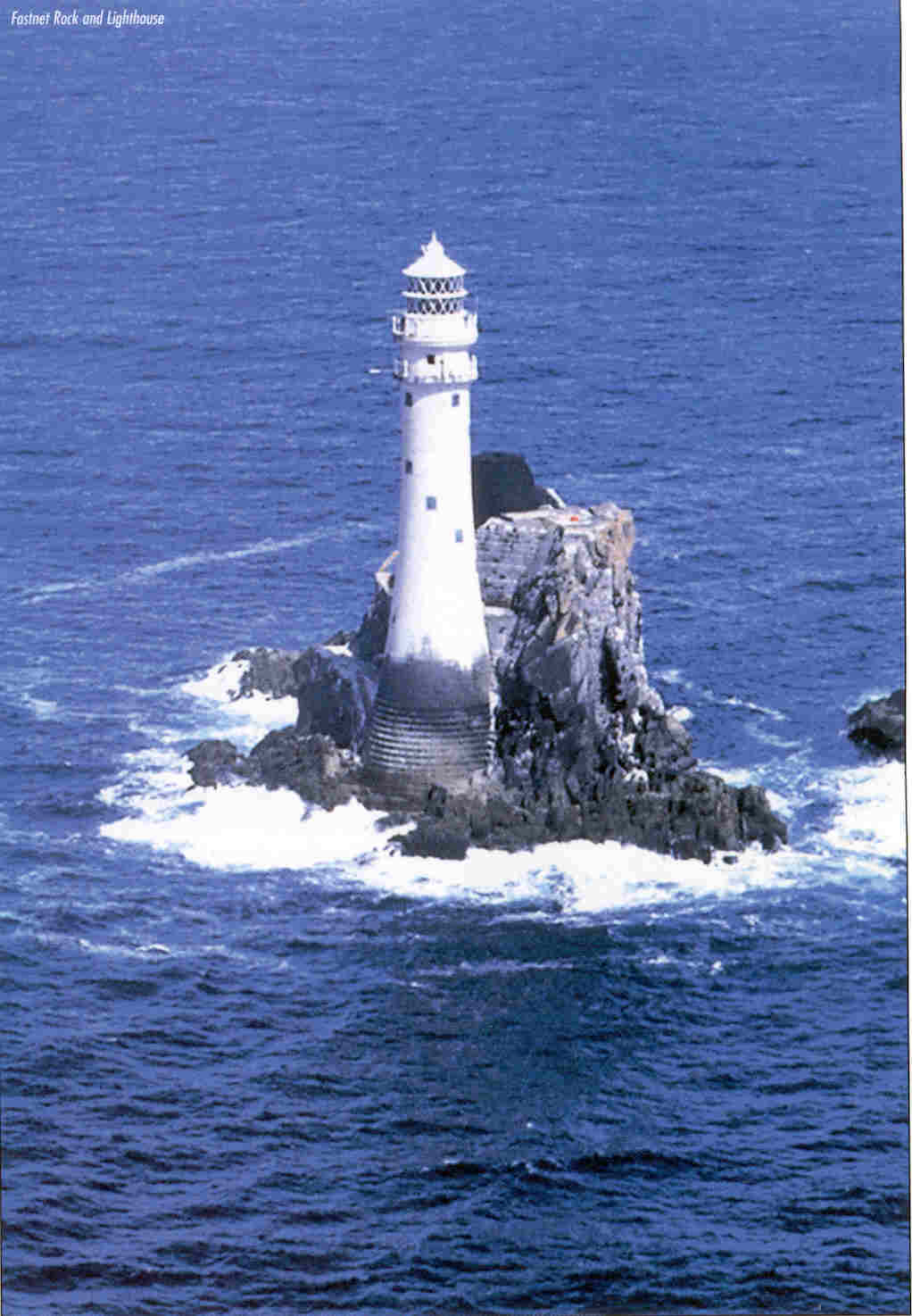
To the Lighthouse


Reading Nick's blog, I agreed with much of what he said...many would I think. First the question of importance comes up. How are these mundane events of the Ramsey's lives and their guests important? This is similar to The Dead because there too we have mundane events which are supposed to be the things that stick out...they are important too!!

I most definitely feel for anyone reading Virgina Wolff and attempting to focus with her very complex stream of consciousness style. I find that when I read To the Lighthouse I do not breathe until she truly ends her sentence with a period (maybe I get lightheaded which is why I find myself fading in and out of concentration when I read her). This creates slight confusion at times. This book is fairly easy to read but then when I stop I can't necessarily answer as to what I have just read. I read without reading which becomes a problem!

Basically, I see this as a deep reflection through the minds of her characters as to what their simple wants, needs, and desires are even if they are mundane.

I find it interesting that Nick brings up the Freudian oedipus complex because that is very important to me and the characters of James and Mrs. Ramsay throughout the novel.

Once I dig deeper into this I will blog about the epiphanies I am having...

Wednesday, February 24, 2010

oohh La La...


Haha..ok Ihad to post a picture of Keats (Left)and Eliot (right). No...I am not physically attracted to either but their words and intelligence on the other hand arouse me. Lightbulbs don't go on and off, they simply go on and stay on when I delve into their writings. I am posting a link to Keats' Vale of soulmaking (as I have done in every blog I have ever created for Dr. Sexson) in case anyone wants to see what it is that hit me and caused me to involve myself so deeply in Keats!
It really is great! Enjoy!!! (I guess even Keats rules over hunger!) I really do need therapy! But I am going to say that Jon Orsi needs therapy asap because he can't even eat lunch or sit down and have a meal without surrounding the table with Samuel Beckett!! Although, I am finding I don't quite mind his obsession anymore...